

In the world of infrastructure, the footing is the keystone of all structure’s stability and endurance. When it comes to erecting solid, trustworthy foundations, foundation services have a key part. These expert methods support edifices by conveying their loads deep into the earth, securing that they stay safe and secure against the pressures of the environment and time. This thorough resource will explore the significance of support services, analyzing various methods, obstacles, and the significant impact they hold on building tasks of all sizes.
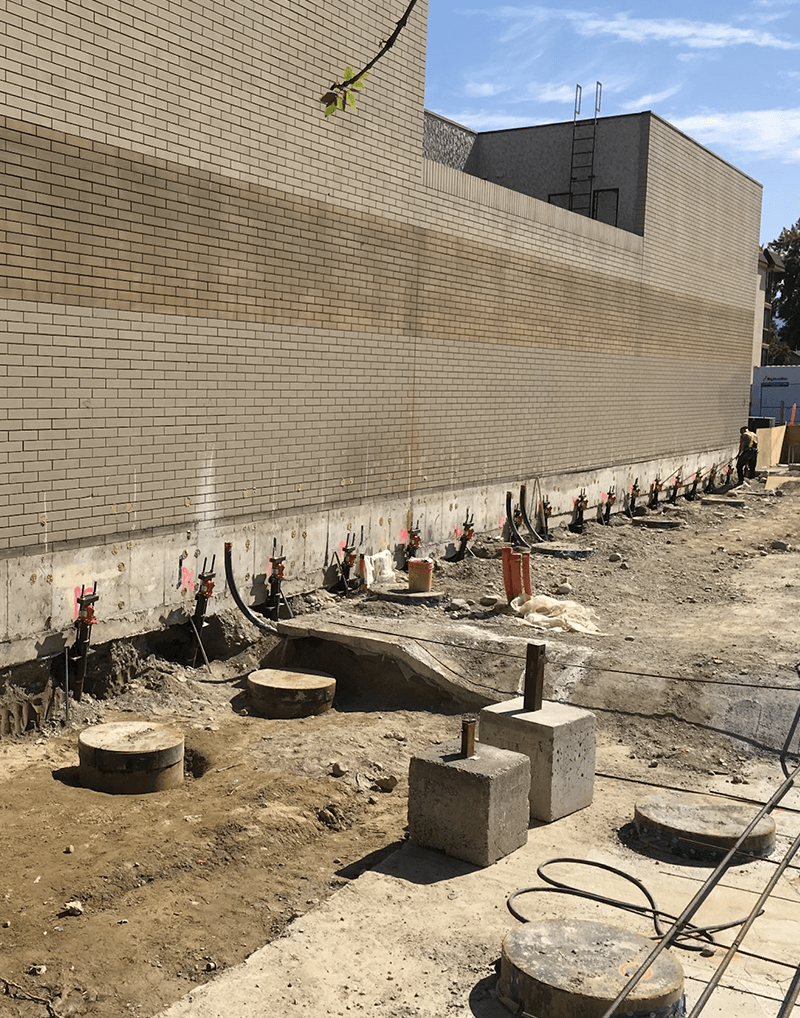
Comprehending the function and importance of support services is crucial for anyone engaged in building, from designers to supervisors and contractors. Regardless of whether you are undertaking a large-scale infrastructure initiative or a housing project, recognizing the signs that indicate the necessity for support can preserve time, assets, and likely complications down the line. Come along as we uncover the intricacies of support services and discover how they create sturdier building bases, tailor to challenging ground types, and support efficient project success.
Grasping Foundation Solutions
Foundation services are a crucial aspect of building that provide strong foundations for various structures, including domestic buildings to massive infrastructure projects. The piling process involves placing or drilling piles into the ground to direct the load of a building to more profound, solid soil layers. This methodology is particularly crucial in areas with challenging soil conditions, where traditional foundations may not offer the adequate stability and support. Piling creates a sturdy base that allows structures to endure external stresses such as heavy loads, soil erosion, and seismic activity.
There are several types of piling methods, including pressurized piles and drilled piles, each with its particular applications and benefits. Driven piles are pre-formed and driven into the ground, making them ideal for rapid installations and projects requiring high load capacities. On the flip side, bored piles are constructed by drilling into the ground and stuffing the hole with concrete, which can be preferable in urban settings where sound and vibration need to be limited. The choice between these methods depends on the project's particular requirements, including soil conditions, the nature of the building, and financial limits.
Understanding the importance of piling services guarantees that development projects are built on a reliable and reliable foundation. Soil conditions play a crucial role in determining the correct type of piling and its depth, as different soils have distinct bearing capacities. Additionally, employing professional piling services helps mitigate common issues such as misalignment, subsidence, and other structural problems that may emerge during the life cycle of a project. This foundational support not only enhances the safety and sturdiness of structures but also contributes to the long-term success of construction projects.
Choosing the Appropriate Piling Method
Choosing the appropriate piling solution for a building project is essential for ensuring the strength and durability of the structure. Several factors must be taken into account, including the kind of structure, ground conditions, and the mass of the building being anchored. A detailed site study can provide important insights into the ground's characteristics, aiding to determine whether driven piles, augered piles, or mini-piles are the most suitable choice for the construction. Comprehending these specifics can significantly impact the efficiency of the foundation.
Soil conditions play a critical role in the choice of piling methods. For situations where the subsurface consists of compact soil or rock layers, pile-driven piles may be the most suitable choice due to their capability to bore through tough layers. In Piling Arnold Nottinghamshire , in looser or unstable soils, bored piles could provide increased stability and reduce the likelihood of soil shift. Additionally, challenging ground conditions such as high groundwater levels or contamination may require specialized piling methods, making it crucial to consider these factors carefully.
Cooperating with skilled professionals and piling providers is vital in the decision-making process. Their experience can guide project members in selecting the best solution customized to both the environmental context and building needs. By factoring in all these factors, you can ensure that the chosen piling approach not only reinforces the edifice properly but also complies with financial and timeline constraints.
Piling in Building Works
Foundation services have a vital role in guaranteeing the durability and durability of building projects across various sectors. Whether for housing buildings, commercial facilities, or massive construction projects, effective foundation solutions lay the groundwork for safe and reliable structures. Foundation is especially essential in areas where ground conditions are unsuitable or where the loads on the foundation will be exceptionally high. By moving the weight of the structure to lower, more secure soil layers, foundation helps mitigate risks associated with land subsidence, shifting, and other potential design issues.
The implementation of various types of piling methods—such as driven piles, drilled columns, and micropiles—depends on the particular needs of the construction project. Engineers must consider elements such as soil makeup, environmental factors, and the function of the building when choosing the suitable foundation method. For case in point, hammered piles are often used in areas with relatively shallow bedrock, while micropiles can be effective in tight spaces or problematic ground conditions. Each technique comes with its own benefits and can significantly influence construction schedules and costs.
As building projects grow in size and scale, the importance of professional piling techniques cannot be overstated. The correct piling method not only enhances base support but also contributes to the overall safety and durability of the building. Through careful preparation, project setup, and implementation, contractors can prevent common foundation issues and ensure optimal performance over the course of the duration of the building. The use of modern equipment and techniques further boosts efficiency, making it essential for project participants to engage knowledgeable foundation professionals from the outset.